• Home
  • About
  • Calendar
  • Contact
  • Sponsors
  • Newsletters
  • A Members Area
    • AFFC_Member_Briefing
    • AFFC_QandA
RED TAG FLY FISHERS
  • Home
  • About
  • Calendar
  • Contact
  • Sponsors
  • Newsletters
  • A Members Area
    • AFFC_Member_Briefing
    • AFFC_QandA

Learn to Fly Fish


So, You’re Thinking About Fly Fishing

So, You’re Thinking About Fly Fishing?
An informal little intro to a big, wonderful world.
If you’ve ever watched a fly fisher from a bridge and thought, “That looks peaceful, but also… what are they even doing?” — you’re not alone. Fly fishing can seem like a mysterious dance of feathery lures and fancy wrist flicks. But here’s the secret: it’s less about the fish and way more about a feeling.

At its heart, fly fishing is a gentle invitation to slow down, breathe deep, and become part of the landscape. And whether you’re looking for a mental reset, a creative outlet, or a new community, it might just be the perfect fit.

Your Brain on a River
Let’s start with the mental health bit, because it’s a big one. Life is noisy. Our phones buzz, calendars fill up, and our brains often feel like a browser with 47 tabs open. Fly fishing is the quiet “close all tabs” button you didn’t know you needed.

When you’re standing in a river, you aren’t thinking about your inbox. You’re reading the water, watching for insects, and feeling the rhythm of your cast. It’s a form of active meditation. Studies have shown that spending time near “blue spaces” (rivers, lakes, the ocean) lowers cortisol and anxiety. Add in the focus required to present a fly naturally, and you get a mental reset that’s hard to find anywhere else. It’s less about catching fish and more about catching a break.

More Than a Hobby—It’s a Journey
One of the best things about fly fishing is that it grows with you. It’s not a hobby you “finish.”
  • On the water, it’s a physical puzzle: reading currents, understanding insects, and learning to cast in the wind.
  • Off the water, it’s a creative playground. This is where the magic of fly tying comes in. Sitting at a vise, spinning fur and feathers onto a hook, you get to be an artist, a biologist, and a tinkerer all at once. It’s incredibly satisfying to catch a fish on a fly you tied yourself.
  • And then there’s the learning and research. You’ll find yourself down rabbit holes about river entomology, rod-building, or the history of a classic pattern. It’s a pursuit that engages your mind just as much as your body.

The Best Part? You Can Take It Anywhere.
This isn’t a sport that requires you to be at a specific field at a specific time. Fly fishing is a lifetime companion.
  • When you’re traveling, it turns a generic vacation into an adventure. You see a river or a coastline not just as a view, but as an opportunity. A travel rod in your suitcase means you’re never far from a moment of connection.
  • When you’re at home, it’s the quiet joy of a Tuesday evening at the tying bench, or the anticipation of a Saturday morning trip to a local pond. It provides a gentle structure—a reason to get up early, to look forward to the weekend, and to have something that’s just for you.
Why a Club? Why Community?
You can absolutely learn to fly fish on your own. But a fly fishing club is like a fast-pass to the best parts of the sport.
It’s about finding your people. In a club, you’ll find:
  • Shared Passion: There’s nothing quite like the look of pure joy when you help someone land their first fish on a dry fly. The enthusiasm is contagious.
  • Mentorship: Fly fishing has a learning curve. A club turns that curve into a friendly slope. Someone will gladly show you how to untangle your first “wind knot” without making you feel silly.
  • Belonging: These are the folks who will share their secret spots (eventually!), who organize river clean-ups, and who gather in the winter to tie flies, share stories, and dream about the season opening.
It’s a social connection rooted in nature, which is a pretty special combination.
A Pursuit for a Lifetime
Fly fishing isn’t about perfection. It’s about progress. It will humble you one day and exhilarate you the next. It offers a way to be creative, a reason to be outdoors, a community to lean on, and a tool for mental wellness that you can rely on for decades.

Whether you’re 18 or 80, traveling abroad or fishing your local creek, it’s always there—a creative, engaging, and wonderfully absorbing pursuit.
​

So, if you’re curious, come give it a cast. The water’s fine, and we’d love to have you.

​Casting Tuition and Practice
​
​New fly fishers are encouraged to first learn the art of casting and membership gives you access to our casting pool situated in Fairlea Road in Yarra Bend Park Fairfield.  We provide free expert fly casting tuition to new members and have equipment available for use at the casting pool. In a couple of hours and with a little practice we’ll have you casting confidently.  


Check out our calendar  we are usually at the pool Every Saturday Morning 9 - 11 am.  Drop by to say hello and have a coffee, we have skilled trainers  who can lend you a rod,  give you some free coaching to see if this is something you might want to take up.
Picture

​Understanding Fly Tackle and Equipment
Often new fly fishers are unsure of the type of fly equipment to purchase. The club can provide a list of appropriate tackle and has a number of club sponsors who can provide expert advice and discounts on gear to our new members. ​
Picture
Picture

​​Fishing Strategies and Techniques
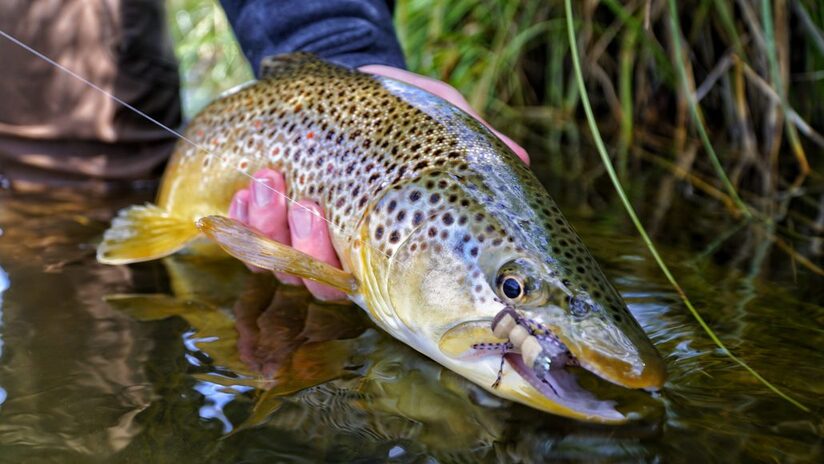
​The best way to learn stream craft and fishing strategies is through actually fishing. Red Tag hosts a number of fly fishing trips throughout the year.   Experienced members of the club are always on hand to pass on knowledge of stream-craft and spend time with you on the water.
Picture
Picture
Picture

​The Red Tag Development Program

​Each year the club has increases membership from new fly fishers. To assist these new fly fishers the club has introduced a
DEVELOPMENT PROGRAM specifically designed for new fly fishers.

The program will fast track those wanting to learn fly fishing and covers:

- Casting on a one to one basis.
- Learning knots, rods, lines, other equipment, waders and flies.
- Fly tying lessons and learning something about entomology.
- Fishing for trout one on one basis, firstly at a trout farm and then on a stream.
- Lake fishing on a one on one basis.
- Learning about trout behaviour by reading key books, searching the internet, accessing guided trips and attending club trips.
  • Home
  • About
  • Calendar
  • Contact
  • Sponsors
  • Newsletters
  • A Members Area
    • AFFC_Member_Briefing
    • AFFC_QandA